Keeping the Crew Moving: How Strategic Dumpster Placement Speeds Up Demolition
On a demolition job, the single biggest hidden labor cost is usually walking. Every extra 50 feet between the work area and the container turns into hours of carrying, and on a three-day interior gut that adds up fast. Choosing the right dumpster rental size matters, but where the container sits on the site often decides whether the crew finishes Thursday or Saturday.
Demolition debris is heavy, awkward and constant. Plaster, lath, joists, tile and old cabinetry all have to travel from the room to the roll-off, and the path they take is the real schedule. Getting that path short, straight and legal before the David Geppert Recycling truck arrives is the cheapest productivity gain on the whole job.
What a Long Carry Actually Costs a Demolition Crew
A two-person crew hauling debris 100 feet instead of 25 feet spends roughly four times as long in transit per load. On a typical rowhome gut producing 25 to 30 cubic yards of material, that difference can swallow 8 to 12 labor hours across the job.
Longer carries also mean more stair trips, more hand-offs and more dropped loads. Material handling and carrying are among the more common sources of back and shoulder strain in construction, which is why most experienced foremen set the container before they set the crew.
The volume involved is easy to underestimate. The U.S. EPA reports that construction and demolition debris accounts for more than 600 million tons generated annually in the United States, with demolition responsible for the large majority of it. A single kitchen tear-out can fill 10 cubic yards before lunch.
Measure the Site Before You Book the Container
Placement planning starts with a tape measure and five minutes of honest looking. Most sites have exactly one or two workable spots, and finding them in advance beats arguing with a driver at 7 a.m.
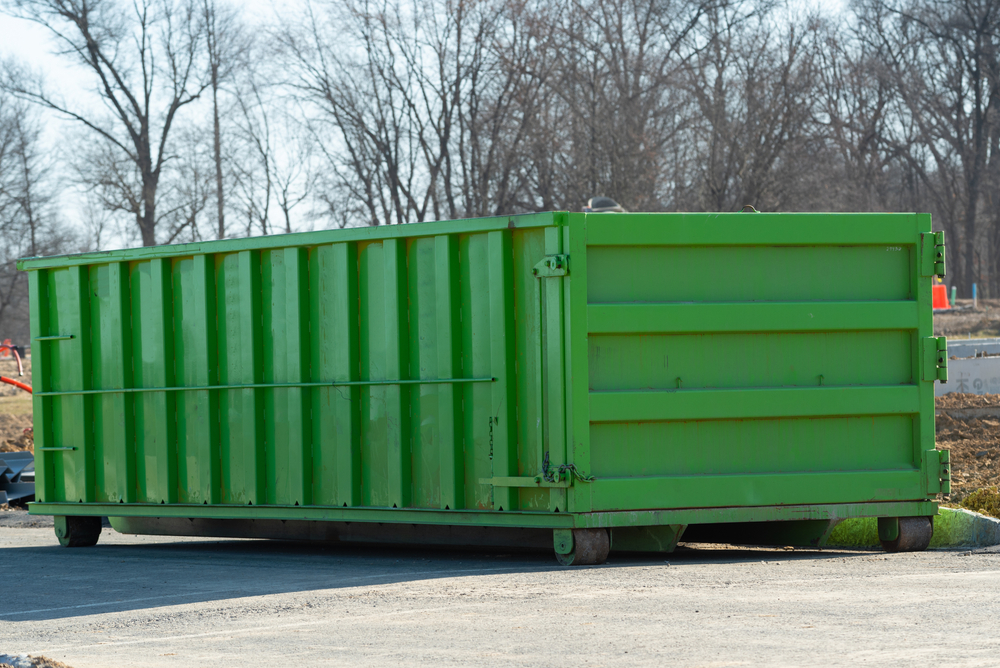
- Container footprint: a 20-yard roll-off runs about 22 feet long and 8 feet wide; a 30-yard is similar in footprint but roughly 6 feet tall; a 40-yard stands about 8 feet tall.
- Delivery approach: the truck needs roughly 60 feet of straight, level clearance to roll the box off and tilt it back on.
- Overhead clearance: plan on at least 22 to 25 feet of vertical space for the hoist arm, which rules out spots under low wires, awnings or mature tree limbs.
- Door swing: the rear barn doors need 4 to 6 feet of swing room if the crew plans to walk material in rather than throw it over the side.
- Surface condition: soft soil, fresh asphalt and decorative pavers all need protection or avoidance.
Write those numbers down and share them when you book with David Geppert Recycling. A dispatcher who knows the alley is 11 feet wide can send the right truck instead of a second trip.
Placement Strategies for Job Sites
City work rarely offers a wide-open yard, so placement becomes a matter of picking the least-bad option and working around it. Three patterns cover most of what crews run into around cities.
Rowhome Interior Demolition
With no driveway and a shared party wall, the container almost always goes curbside directly in front of the property. Keep the door end facing the stoop so the crew walks debris straight in rather than lifting it over a 6-foot wall. If you are scheduling a dumpster rental in Brewerytown or other neighborhoods with tight street parking, you will often need to arrange reserved curb space a few days ahead of delivery.
Commercial Interior Buildouts
Loading docks and rear service alleys beat street frontage when they are available, since they keep debris away from pedestrians and let the crew use carts. For construction dumpster rental in Center City, building management usually dictates a delivery window, and placement has to leave fire lanes and other tenants’ access clear.
Detached Homes and Open Lots
A driveway placement keeps the container on private property and avoids permit fees entirely. Angle the box so the doors face the work area and leave the truck a straight backing lane, because a dumpster parked sideways across a driveway apron usually cannot be swapped without moving vehicles.
Permits, Sidewalks and Street Occupancy
Any container that sits on a public street, sidewalk or shoulder in Philadelphia generally requires a right-of-way occupancy permit from the Philadelphia Department of Streets. Approval commonly takes several business days, and fees vary by block and duration.
Private property placement skips that process, which is one reason crews fight for driveway access when it exists. Blocking a bike lane, bus stop or crosswalk is a reliable way to collect a ticket, so check the curb markings on the exact 25-foot stretch you plan to occupy.
Protect the Surface Under the Box
A loaded 30-yard container can weigh 10 to 12 tons, and all of that rides on four narrow rails. On asphalt during a July heat wave, that pressure leaves permanent depressions.
- Lay 2×10 planks or plywood sheets under the rails and rear wheels before delivery.
- Keep containers off pavers, stamped concrete and newly sealed driveways whenever another option exists.
- On soft ground, add gravel or steel plates so the truck does not sink while winching the box back on.
Match Placement to the Demolition Sequence
Demolition rarely happens in one place. A full-building gut might start on the third floor, move to the second, then finish with basement mechanicals and exterior work.
If the project runs more than a few days, consider whether the container should move between phases or whether a chute, cart path or window opening can bridge the distance instead. Many crews set a debris chute from an upper-floor window straight into the box, which turns a four-flight carry into a 10-second drop.
Planning the sequence also helps with sorting. Keeping clean wood, metal and concrete separate improves processing efficiency at the David Geppert Recycling facility and sometimes lowers disposal cost, and our article on how construction dumpster rentals simplify demolition projects goes deeper on phased waste handling.
Leave Room for the Swap-Out
A placement that works for delivery sometimes fails at pickup, usually because the crew parked a trailer behind the box or stacked material along the approach lane. Swap-outs on an active demolition can happen every day or two, and a blocked container means idle labor.
Keep the 60-foot approach lane clear every evening, not just on delivery day. If the job also involves tearing off shingles, the same clearance planning applies, as covered in our post on dumpster rentals for roof replacement, where debris lands beside the house rather than inside it.
Finally, confirm the fill line. Material above the rails cannot legally travel, and the driver will refuse the load until the crew pulls it back down.
Plan Your Demolition Container Placement With Us
Tell us the site dimensions, the access route and the demolition schedule, and we will recommend a container size and drop spot that keeps your crew carrying debris 25 feet instead of 125. Contact David Geppert Recycling today to schedule delivery around your tear-out dates.