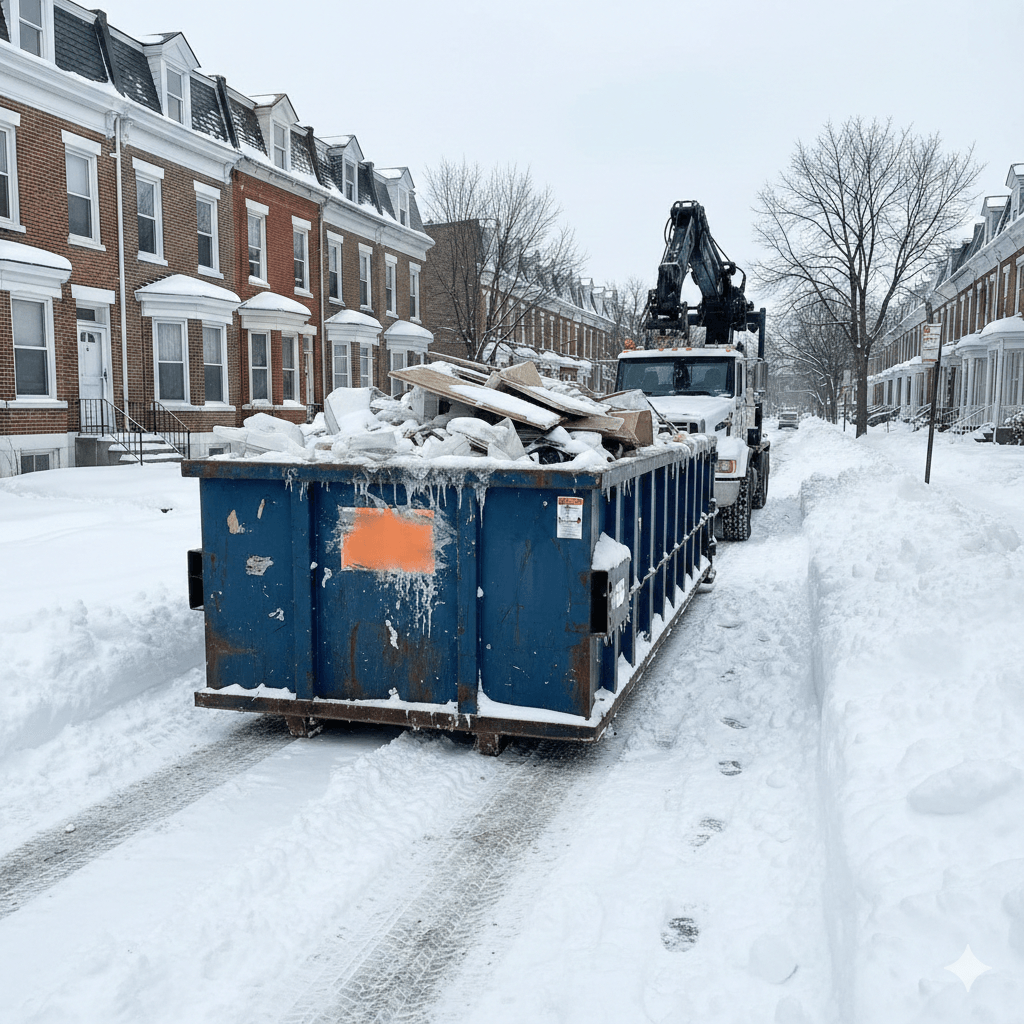
How Cold Weather Affects Waste and Junk Disposal in Philadelphia
Cold weather doesn’t stop construction, renovations, cleanouts, or commercial projects in Philadelphia. However, it does change how waste and junk disposal need to be handled.
From frozen debris to tighter delivery windows, winter conditions introduce challenges that many homeowners and contractors don’t anticipate until a problem arises.
At David Geppert Recycling, cold-weather waste management is something we’ve dealt with for decades. With roots in Philadelphia’s demolition, recycling, and hauling industry going back generations, we’ve learned firsthand how winter impacts dumpster rentals and junk removal, and how to plan around it.
TL;DR
Cold weather makes waste heavier, limits dumpster placement, and can affect delivery and pickup timing. Snow, ice, and frozen debris increase weight and handling issues, while Philadelphia permit rules still apply year-round. Planning ahead and using a reliable local dumpster provider helps avoid delays and added costs during winter projects.
Key Takeaways
- Frozen debris weighs more and can affect dumpster load limits
- Snow and ice reduce placement options on Philadelphia streets
- Permits are still required for street or sidewalk placement in winter
- Winter weather can impact delivery and pickup timing
Cold Weather Changes How Waste Behaves
One of the most overlooked winter issues is how materials themselves react to low temperatures.
Frozen Debris Becomes Heavier
Moist materials, like drywall, wood, roofing, soil, and household junk, absorb water. When temperatures drop, that moisture freezes, adding unexpected weight. This matters because dumpsters are priced and hauled based on safe load limits, not just volume.
Snow and Ice Increase Contamination
Snowfall can easily find its way into an open dumpster. Once it melts and refreezes, it creates ice layers that:
- Add weight
- Make unloading more difficult
- Increase disposal time and transfer stations
That’s why winter dumpster rentals require a little more planning than simply tossing debris over the side.
Dumpster Placement is More Complicated in Winter
Philadelphia streets are tight, even in perfect weather. Winter adds a layer of complexity.
Reduced Space Due to Snowbanks
Plowed snow often eliminates curb space that would normally accommodate a roll-off dumpster. That can impact:
- Where a dumpster can be safely placed
- Whether a permit is required
- How easily the truck can maneuver for delivery and pickup
Because our drivers know Philadelphia neighborhoods street by street, not just through GPS, we’re able to anticipate these issues before delivery day.
Frozen Ground Affects Stability
In colder months, ground conditions matter. Frozen or uneven surfaces can cause dumpsters to shift once thawing begins. That’s why experienced haulers ask detailed placement questions upfront rather than dropping containers blindly.
Winter Permits and Municipal Rules Still Apply
A common misconception is that winter relaxes permit requirements. In Philadelphia, that’s not the case.
If a dumpster is placed on:
- A public street
- A sidewalk
- Certain shared or restricted spaces
A permit is usually required regardless of season. Cold weather doesn’t override city regulations and permit delays can slow down projects if they aren’t handled in advance.
Experienced local providers will walk customers through this process rather than letting them find out after a violation notice appears.
Pickup Timing Matters More in Cold Weather
Ice and Snow Affect Hauling Schedules
While reliable companies plan around winter conditions, severe weather can affect:
- Same-day service availability
- Tight pickup windows
- Transfer station traffic
That’s why communication becomes critical in winter. At David Geppert Recycling, drivers stay in contact before arrival, and customers are given realistic time windows instead of vague estimates.
Many winter complaints about dumpster rentals come down to one thing: dumpsters sitting longer than expected. Reliability matters more when weather is unpredictable.
Transfer Stations Operate Differently in Winter
Cold weather doesn’t just shut down transfer stations, but it does change how material flows.
Longer Unload Times
Frozen loads take longer to process safely. Ice-bound debris doesn’t move the same way loose material does, which can slow unloading and scale operations.
Understanding that winter loads take longer helps customers plan schedules more realistically.
Dumpster Bag Pickup is Often Impacted by Cold Weather
Many customers turn to dumpster bag systems during winter, only to find they’re denied pickup. Common reasons include:
- Frozen bags stuck to the ground
- Overfilled or ice-heavy bags
- Access issues due to snow or parked vehicles
This is where experienced local operators step in. When a bag pickup has already been refused, identifying why it failed is often the key to resolving the issue quickly.
How to Prepare for Winter Dumpster Rentals
Proper preparation can prevent most cold-weather disposal problems.
Helpful Winter Tips:
- Keep all debris below the rim of the dumpster
- Make sure doors fully close
- Cover dumpsters when snow is expected
- Avoid mixing excessively wet materials
- Plan placement with snow removal in mind
A good rule of thumb: if debris wouldn’t safely hold water, it shouldn’t be loaded that way.
Why Local Experience Matters When Temperatures Drop
Cold weather quickly highlights the difference between companies that know Philadelphia and those that don’t.
David Geppert Recycling offers:
- Company-owned, well-maintained trucks
- CDL-certified drivers with local knowledge
- Low employee turnover and hands-on operations
- Reliable delivery and pickup, even in winter
Winter conditions don’t stop waste disposal, but they do require experience, planning, and dependable service.
FAQs
Does cold weather affect dumpster rental pricing?
Cold weather itself doesn’t change pricing, but frozen or snow-covered debris can add extra weight. Heavier loads may affect disposal costs, so it’s important to avoid adding unnecessary snow or ice to the dumpster.
Can a dumpster be delivered in snow or icy conditions?
Yes, dumpsters can usually be delivered in winter as long as the placement area is accessible and safe. Severe weather may cause short delays, but clear communication and proper preparation help keep deliveries on schedule.
Do I still need a permit for a dumpster in winter?
Yes. Philadelphia permit requirements apply year-round. If a dumpster will be placed on a street, sidewalk, or other public area, a permit is typically required regardless of the season.
Can frozen debris damage a dumpster?
Frozen debris won’t damage the container, but it can make unloading more difficult if materials are stuck together or frozen solid. Keeping debris loose and avoiding excess moisture helps prevent issues.
Year-Round Reliable Dumpster Rental in Philadelphia
Cold weather adds challenges, not excuses. With proper planning and a knowledgeable provider, winter projects can move forward without unnecessary delays or costs.
For dumpster rentals and junk disposal in Philadelphia, David Geppert Recycling continues a family tradition of dependable, professional service.
Contact us to schedule a dumpster rental today!